10 Most Popular And Brightness Types of Yellow Flower Names
Introduction of Yellow Flower Names
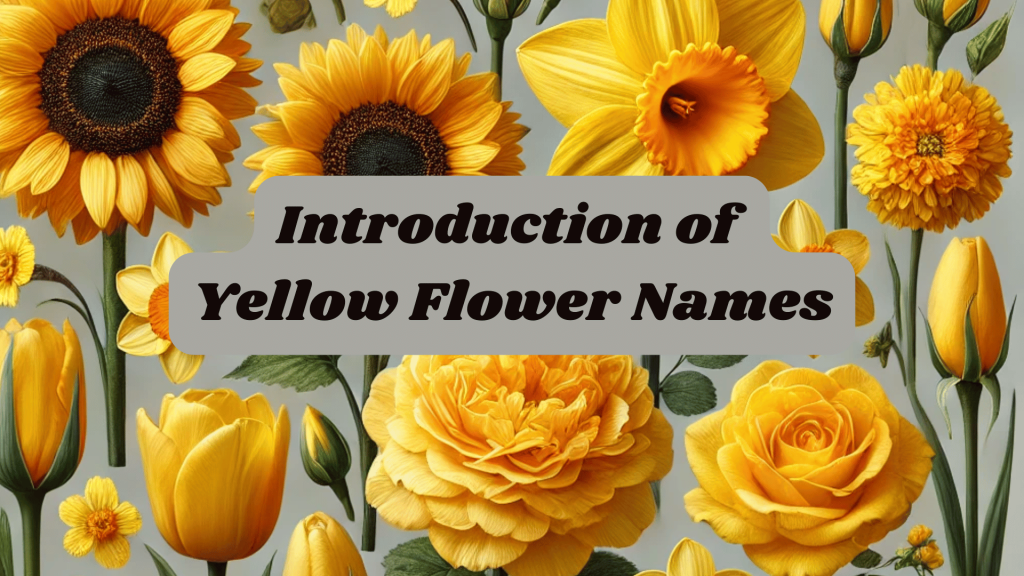
Yellow flowers combine their lively appearance with a symbolic meaning of happiness together with joy and positive emotions. Yellow flowers bring energetic beauty and warm atmosphere to every gardening setting. The following list contains the ten most frequently chosen yellow flower varieties which will help you decide your garden plan’s yellow addition.
1. Sunflowers (Helianthus annuus)
Sunflowers maintain their position as the classic yellow bloom because of their significant round petals and tall plant growth. Sunflowers reach heights of up to 10 feet while providing gardens with a dramatic and sunny garden element. The optimal growing condition for these flowers requires total sunshine exposure.
2. Daffodils (Narcissus)
During spring the daffodil plant produces its trumpet-shaped blooms early among yellow flowers that come in different shades. The cheerful flowers appear frequently after the winter season ends as one of the first spring blossoms to emerge.
3. Marigolds (Tagetes)
Marigolds exist as attractive and adaptable flowers due to their signature deep yellow and orange flowers. These flowers prove simple to cultivate because they function perfectly well in garden beds and borders and planters. The plant Marigolds serves as organic insect defense through its natural pest discouragement ability.
4. Black-eyed Susans (Rudbeckia hirta)
The flower of Black-eyed Susan presents radiant yellow petals which frame its central dark area and resemble the form of a daisy. The plant produces robust flowers which blossom during late summer through fall. These flowers prosper best under full sunlight but they can still survive when grown in partial shade conditions.
5. Coreopsis (Coreopsis verticillata)
The plant Coreopsis exhibits its yellow flowers in late spring through summer and goes by the common name of tickseed. The daisy-flowering plants draw pollinators toward them effectively while serving as border plants and adding beauty to wildflower gardens.
6. Goldenrod (Solidago)
Goldenrod grows as a perennial plant which produces clusters of yellow flowers. This plant produces yellow flowers throughout late summer to fall and displays a strong yellow appearance. Goldenrod becomes an excellent choice for gardens because it delivers both texture and elevated dimensions.
7. Buttercups (Ranunculus)
The flowers of Buttercups produce short yellow decorative cups which form their distinctive shape. People commonly spot these plants growing in meadows and grasslands while they bring delicate beauty to gardens. The flowers of these plants appear during spring until the beginning of summer.
8. Primroses (Primula)
Yellow stands out as one of the key colors found in the collection of Primrose flowers. Gardeners introduce these flowers in spring for their attractive colors because other flowers remain dormant during that period.
9. Chrysanthemums (Chrysanthemum morifolium)
Chrysanthemums serve as one of the most popular flowering plants which grow during the late season period. The circular rounded flowers of yellow chrysanthemums create a heat-infusing addition for fall gardens through their cushioned appearance. Yellow flowers flourish as potted plants and also thrive when planted directly in soil.
10. Yellow Tulips (Tulipa)
People value tulips because they display a sophisticated and streamlined structure. The appearance of yellow tulips in any garden atmosphere creates a sense of joy and happiness. Yellow tulips appear during early spring months and people use them frequently in flower arrangements.
Why Yellow Flowers in Our Garden?
Yellow flowers serve as outstanding choices for gardens because they generate a bubbly atmosphere of welcome. Yellow flowers serve as happiness boosters while they establish comforting spaces around places. Yellow sunlight color brightens every dark area with its availability. Yellow flowers gracefully fit into every garden no matter which role they play from appearing alone to pairing with red and purple flowers as an exceptional pairing.
Yellow flowers serve both decorative and ecological purposes since they effectively draw pollinators such as bees and butterflies and hummingbirds to enhance the health of your garden.
Benefits of Yellow Flowers in Your Garden
1. The yellow flowers generate fast mood elevations while creating sunlit environments that radiate punitiveness. Your garden receives an immediate boost of color energy due to their vivid yellow appearance.
2. Solar and marigold plants along with other yellow blossoms present beginners and professionals with straightforward gardening opportunities.
3. The majority of yellow flowers draw bees and butterflies to your garden which helps maintain its health and vibrant appearance.
4. Yellow blooms during early spring and late summer months create a vital link between seasonal flowerings which generate ongoing garden beauty.
Yellow Flowers in All Seasons
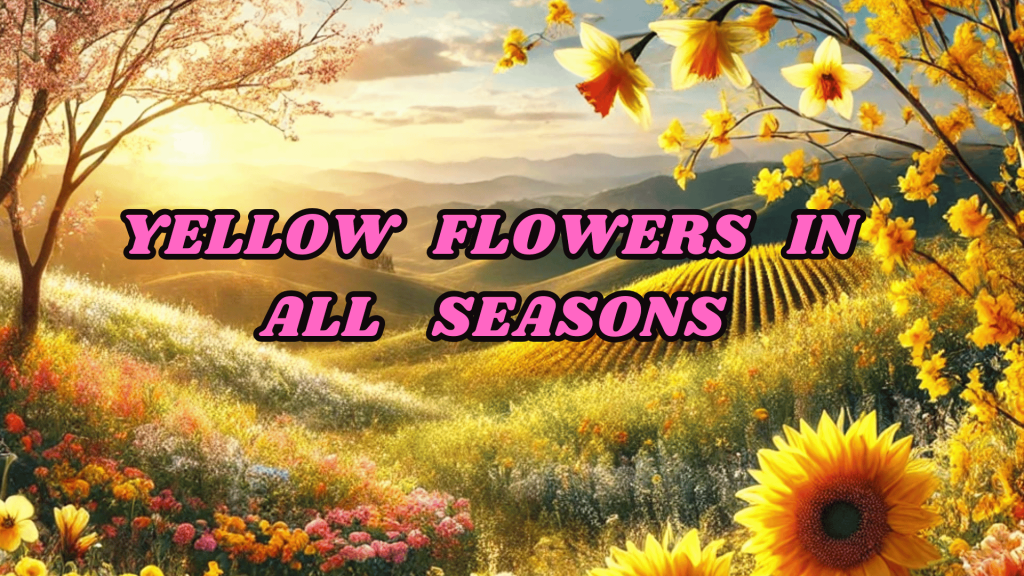
Any gardening space becomes more vibrant through the use of yellow-colored flowers during every season. Your garden will retain its bright beauty across winter and summer through the annual flowering of various plant varieties. I will guide you through a list of ideal yellow flowers which blossom during each season of the year.
Spring: The Early Bloomers
The start of spring brings numerous yellow blooms which announce the termination of winter season cold periods. Yellow flowers provide vibrant garden color during the emerging spring season when temperatures start to rise.
1. Daffodils (Narcissus)
When spring arrives daffodils lead the floral season with their vibrant yellow trumpet blooms indicating that heat will soon release itself from winter’s grip. The plants function best during cold temperatures that arrive during early spring.
2. Primroses (Primula)
Soft and delicate yellow primrose flowers emerge in early spring to illuminate the shaded sections of gardens.
3. Forsythia
Before leaf production begins Forsythia bushes reveal numerous tiny yellow blossoms that cover their framework. Golden flowers emerge from theseplants as early spring approaches to make a dramatic appearance.
Summer: Bright and Bold
Thankfully summer brings about the blooming of yellow flowers in full force thereby creating sustained visual delight during the extended period of sunshine.
1. Sunflowers (Helianthus annuus)
Sunflowers represent summer flowers perfectly since their tall yellow flowers stretch to heights of up to 10 feet. The flower attracts bees together with butterflies through its bloom.
2. Marigolds (Tagetes)
Throughout the entire summer marigolds produce numerous blooms that display intense yellow and orange hues. These flowers adapt well to full sunlight without difficulties since they thrive in the brightness of open garden areas.
3. Black-eyed Susans (Rudbeckia hirta)
Black-eyed Susans show their dazzling yellow petals combined with dark central sections during the entire summer season. Plants of this type possess sturdy characteristics that enable continued blooming during hot summer months.
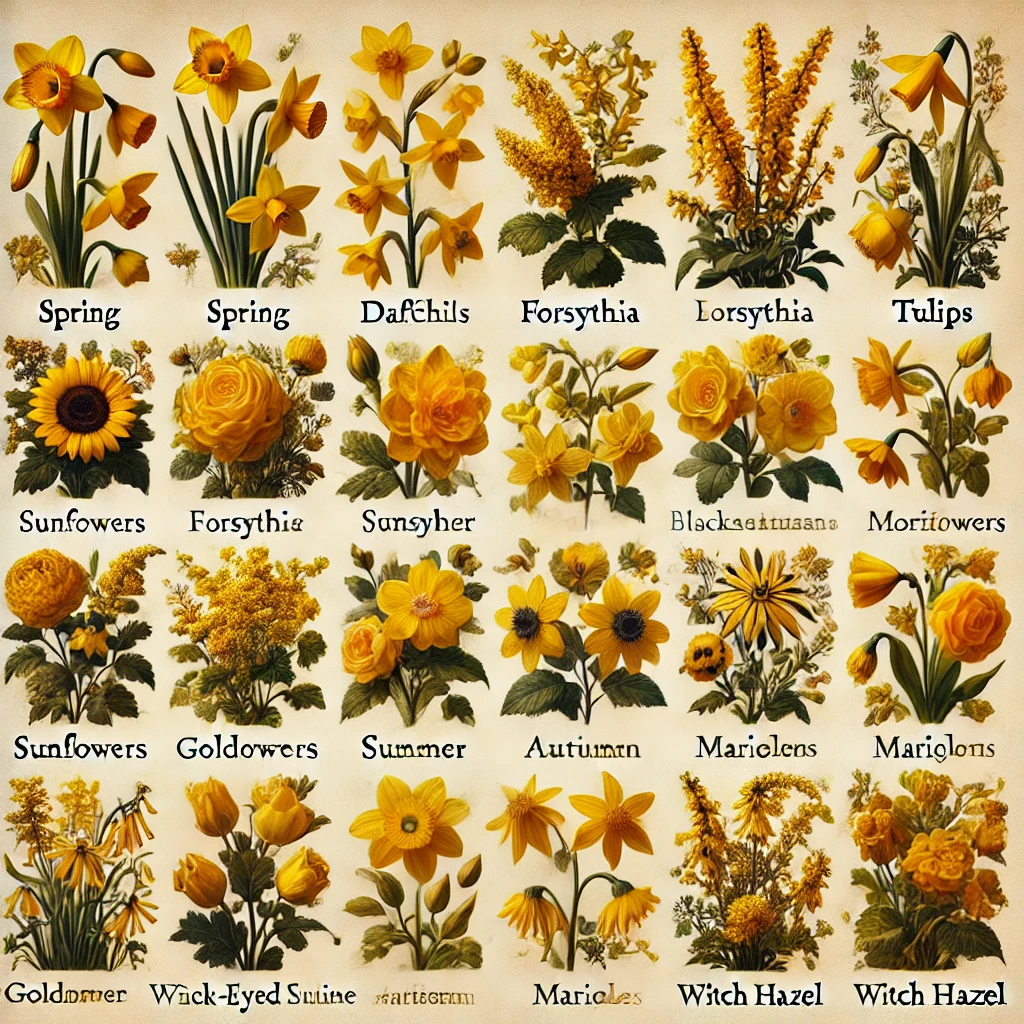
Autumn Gardens Gain a Golden Appeal During Fall Months
The arrival of fall does not mean yellow flowers need to disappear because various species continue blooming throughout this season producing golden garden colors along with leaf transformation.
1. Goldenrod (Solidago)
The yellow flower clusters of goldenrod bloom throughout late summer through the entire fall season on this perennial plant reaching its tall height. Autumn gardens receive golden warmth because of these specific flowers.
2. Chrysanthemums (Chrysanthemum morifolium)
Mainly cultivated for their fall show in late season flowering are yellow chrysanthemums commonly known as mums. The flowers beautiful late-season color enables them to become ideal choices for creating fall garden representations.
3. Autumn Crocus (Colchicum autumnale)
During fall months the autumn crocus delivers its distinctive yellow coloration at a time when many flowers have finished blooming.
Winter: Bringing Cheer to the Cold Months
Despite the reduced flower abundance in winter the garden retains its charm because select yellow species make their appearance.
1. Winter Jasmine (Jasminum nudiflorum)
The winter-harden shrub winter jasmine makes its appearance through its small yellow blooms which become visible throughout bare branches. This productive plant produces vibrant hues in the otherwise dull winter environment.
2. Hellebores (Helleborus)
The plant known as Lenten Rose or hellebore reveals its flowers in winter or early spring based on temperature variations of particular regions. Yellow helleborespecies along with other hellebore varieties produce attractive pale yellow blossoms which have the ability to illuminate gardens in the period when most plants remain dormant.
3. Winter Aconite (Eranthis hyemalis)
The early-spring flowers of Winter aconite provide a cheerful sight to viewers during the bleak season. Sunlight or snow does not halt these flowers because they blossom with buttercup-like yellow petals throughout snowy conditions.
Yellow Flowers in Partial Shade
Certain yellow flowers adapt to shady conditions in addition to the sun-loving yellow flowers which thrive in full sunlight. Black-eyed Susans along with coreopsis are able to survive with shade while continuing to produce vibrant blossoms. Plants that thrive in partial sunlight which will beautify dim areas include various yellow-flowering varieties for your garden.
Partial shade environment slightly reduces the intensity of yellow flowers but these plants maintain their ability to create eye-catching garden attractions. Find low-light tolerant yellow flower varieties because they will produce healthy robust plants.
Also Check: Purple Flower Names
Conclusion
Any garden will benefit greatly from including yellow flowers as part of its design. Every gardener will find their ideal yellow bloom which provides either colorful variety or pollinator-friendly assistance or seasonal appearance. The flowers will naturally embellish your outdoor areas with both happiness and charm no matter which sunlight conditions you select.